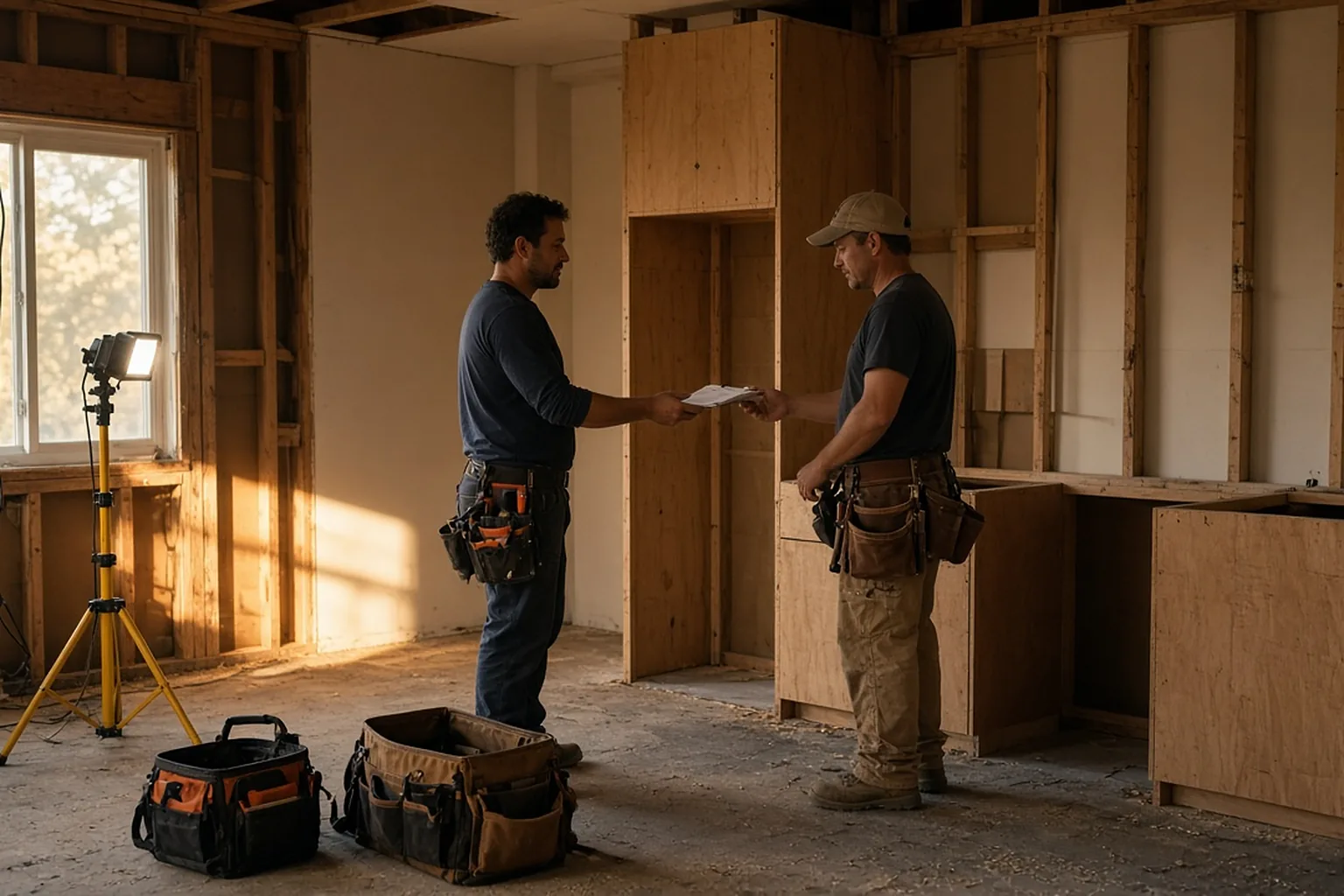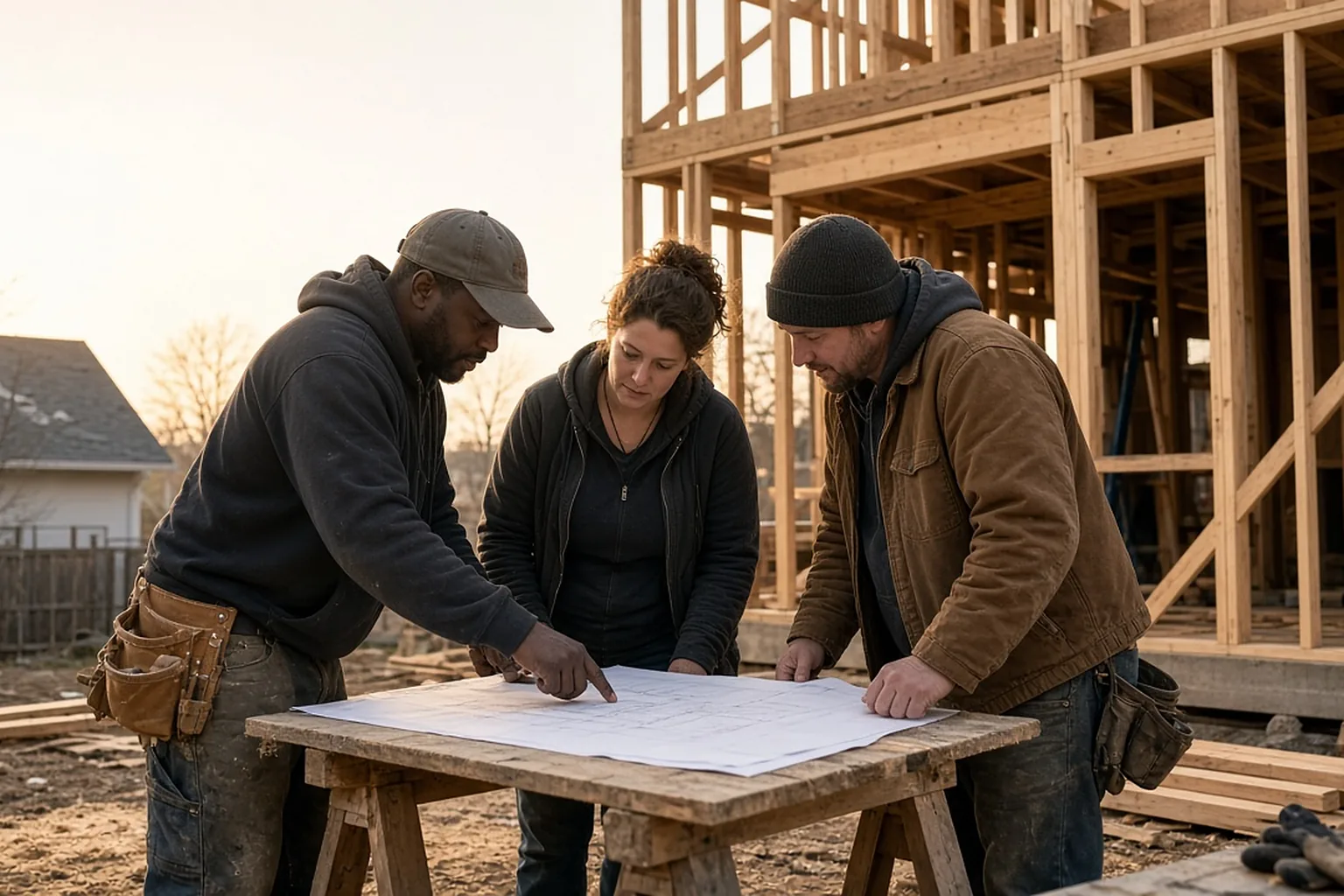


A good sales-to-production handoff gives the people building the project a clear understanding of what was sold, what the price assumes, what’s ready, and what still needs a decision. It gives your PM or project coordinator the information they need to plan the work and move outstanding decisions forward.
Use the checklist outlined below to prepare for your construction kickoff meeting. We’ll cover the scope and customer commitments, the assumptions behind the estimate, readiness to start, and the open items production will need to manage. This way the knowledge gathered during sales and estimating reaches the team delivering the final product.
Transfer the Job You Actually Sold
During sales, design, and estimating, you learn things that don’t always land neatly in the final proposal. The homeowner works nights. The driveway needs to stay clear. A particular detail matters more to them than you might expect.
Those details can affect how production plans and communicates.
Alongside the signed scope, review exclusions, current plans, specifications, selections, allowances, and approved changes. Include customer commitments that affect the work. If a conversation has changed the agreement, resolve and document that appropriately before the team treats it as approved scope.
Make it easy to identify the current information. Your PM shouldn’t have to compare three drawings and a text thread to work out which version to use.
Explain What’s Behind the Estimate
The production team needs to understand the thinking behind the numbers.
Perhaps the labor estimate assumes an empty house and uninterrupted access. Maybe a subcontractor’s price excludes something your team must handle. An allowance may still need to cover a selection the customer hasn’t made.
Walk through the assumptions, known site conditions, subcontractor quotes, and areas that need attention. Explain what’s included and where uncertainty remains.
This gives the PM a basis for planning the work and recognizing when reality differs from what was priced. It also creates an opportunity to catch a gap before someone is on site trying to solve it.
Hold a Real Construction Kickoff Meeting
Don’t just upload the documents and assume the sales-to-production handoff happened. Bring the people who developed and sold the job together with the people responsible for delivering it.
Depending on your company, that might include the salesperson, estimator, designer, owner, PM, or project coordinator. Meet on site when seeing the conditions together will help. Include relevant subcontractors when their input is needed to resolve scope, sequence, or coordination.
The format can be a meeting or a call. What matters is that the team reviews the job together, discusses commitments and assumptions, and identifies gaps.
Give the PM or PC access to the project information beforehand so they can arrive prepared. Use the meeting to work through the project, rather than simply announce that the files are available.
Make Open Decisions Part of the Handoff
A handoff doesn’t mean every selection and detail has already been settled. It does mean production knows exactly what remains open.
Your PM or PC needs to leave the kickoff meeting knowing which decisions still need to be made, who needs to make them, and when they’re needed to support purchasing and the schedule.
From there, the PM or PC owns moving those decisions forward. That may mean getting options from the designer, following up with the homeowner, or confirming lead times with a supplier. They coordinate the decision; they don’t automatically have authority to choose for the customer.
Keep open items visible in the project information and review them as work approaches. “Tile still undecided” needs a next step and a decision date that accounts for ordering and delivery.
Check What’s Ready Before You Start
Imagine a hypothetical kitchen remodel. The contract is signed, and demolition is penciled in for Monday.
At the kickoff meeting, the team discovers that the cabinet delivery date hasn’t been confirmed, the countertop selection is open, and the homeowner expects to use the kitchen during a period when the planned work would make that impossible.
Now there’s something useful to resolve before the crew arrives.
The PM confirms delivery timing and reviews the sequence. The PC coordinates the outstanding selection. Whoever made the customer commitment joins the conversation to clarify expectations and agree on a workable plan.
The start date may hold or need adjusting. Either way, the team can make that decision with the relevant information.
Use a Short Sales-to-Production Handoff Checklist
For your next construction kickoff meeting, review these six areas together:
- Scope: Signed agreement, exclusions, approved changes, and current plans.
- Estimate: Budget, labor assumptions, subcontractor inclusions, and known uncertainties.
- Customer: Expectations, access arrangements, communication needs, and commitments.
- Readiness: Materials, trade availability, permits, and other requirements affecting the start.
- Open decisions: What remains undecided, when it’s needed, and what the PM or PC must coordinate.
- Project information: Where current records live and how updates reach the people using them.
Keep it practical. A checklist should support a useful conversation and help the team spot what’s missing.
Start With the Next Job
Choose your next sold project and schedule the kickoff before production takes it over. Bring the upfront knowledge into that meeting, especially the details you’ve been carrying in your head.
Your team needs a clear starting point and a way to manage what’s still unresolved. Give them that, and you give them a better chance to run the job without needing you to reconstruct the sale along the way.
What should a sales-to-production handoff include?
The six areas in the checklist: the signed scope and current plans, the thinking behind the estimate, customer commitments, readiness to start, the decisions that are still open, and where the current project information lives.
Who should be at the construction kickoff meeting?
The people who developed and sold the job, and the people responsible for delivering it. Depending on the company, that might include the salesperson, estimator, designer, owner, PM, or project coordinator. Meet on site when seeing the conditions together will help, and include relevant subcontractors when their input is needed.
Does the handoff mean every decision is already made?
No. It means production knows what remains open, who needs to make those decisions, and when they’re needed to support purchasing and the schedule. The PM or PC coordinates those decisions; they don’t automatically have authority to choose for the customer.
If you'd like help looking at what you're carrying as the owner and where to start, I offer a free, 60-minute Discovery Call with no obligation.
Join the Mailing List
Get practical ideas for running your remodeling or custom building business with less chaos, straight from Polly.
Your name and email are used to send the list. Read the Privacy Policy.
Let’s Look at What’s Happening in Your Business.
Bring the question that keeps coming back. We’ll talk about what you want to change and whether working together makes sense.
Book a Discovery Call