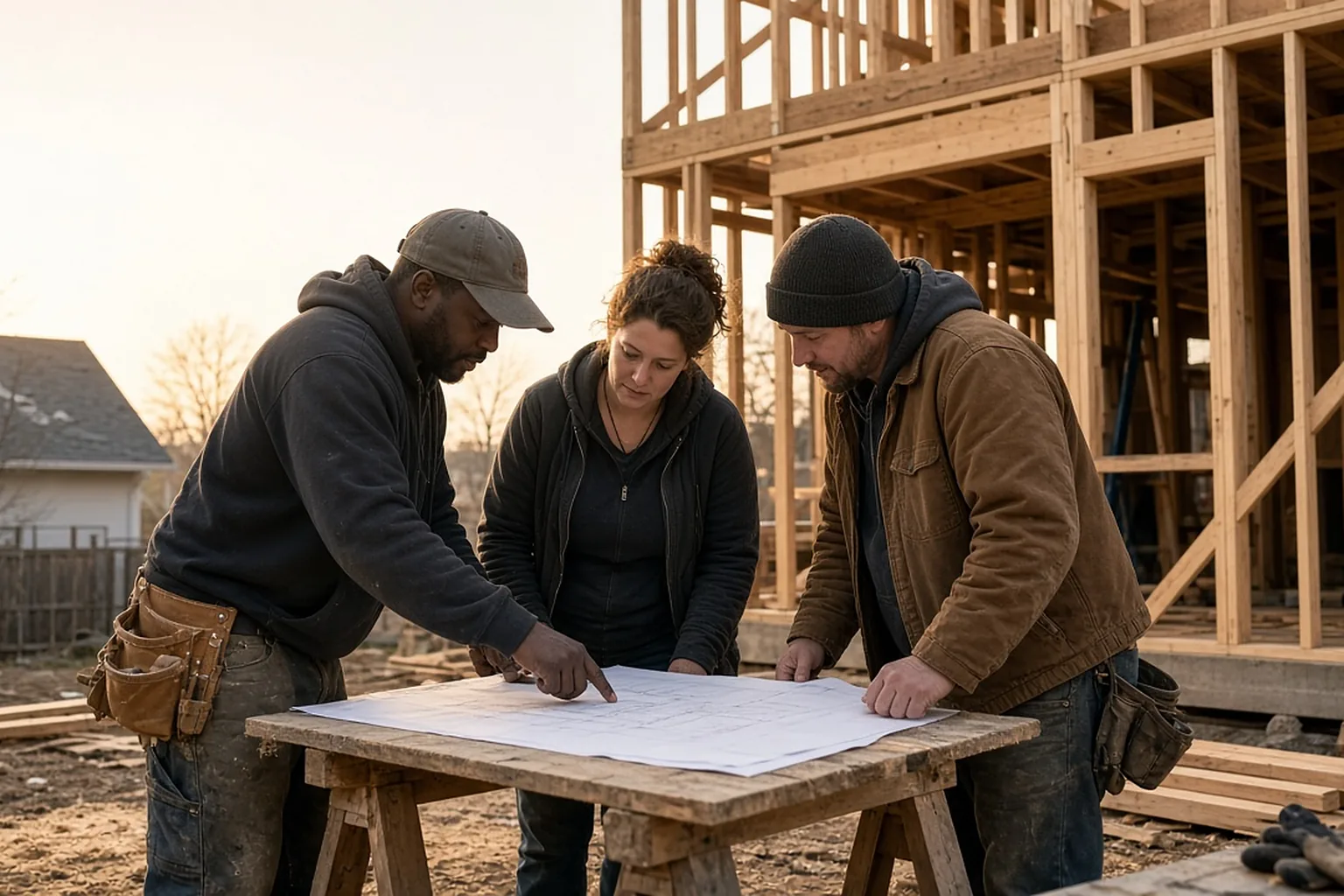


When Everything Still Runs Through You
If you’re overloaded and still the bottleneck in your construction business, hiring may be the next step.
But if you have few systems in place, it can be hard to see how a new person will take work off your plate without needing constant direction. That doesn’t mean you have to organize the whole business before you bring someone in.
I don’t believe you need every process documented before you hire. You do need enough clarity to give the person a fair start—and you need to hire someone whose experience fits what’s missing.
Get Clear on What’s Actually Missing
Start with the work that keeps coming back to you.
Maybe purchasing falls apart because selections are scattered across texts, emails, and a notebook in your truck. Another person placing orders won’t solve that unless someone also organizes how selections get approved and handed off.
Maybe your project manager has a clear schedule and knows the job, but is carrying more projects than one person can reasonably manage. That may be a straightforward need for more help.
Or maybe you already have a change order process, but your team keeps doing extra work before getting approval. Before adding another position, look at whether people understand the expectations, have been trained, and are being held accountable.
Those situations can all feel like “I need to hire.” They call for different decisions.
Look at your numbers, too. The full cost of a hire has to fit the business. Consider what the person will take off your plate, what that allows you to do, and whether the improvement justifies the expense.
Build a Two-Hour Foundation
Give yourself two focused hours to lay out the basics for the role you need next. This is a starting point, not a promise that you can organize an entire construction company in an afternoon.
Write down what this person will own, their three to five recurring duties, what good work looks like, and which decisions they can make without checking with you.
For an operations coordinator, “help with purchasing” is too vague. “Confirm lead times for approved materials, track delivery dates, and flag anything that threatens the job schedule” gives both of you something useful to work from.
Set the limits, too. They might follow up on approved orders independently, while substitutions or added costs still need approval.
Capture one or two essential handoffs. Explain how a field request becomes an approved purchase, or how a signed project moves from estimating into production. Start where missing information causes the most trouble.
Then make a first-month onboarding checklist: access to your software, introductions to vendors and subs, a review of active jobs, and regular time with you to work through questions.
If writing slows you down, talk through the process and use AI to turn your explanation into a draft checklist. Read it carefully and correct it. The checklist needs to reflect how your jobs actually work.
Hire Before Every System Is Ready
Sometimes you need the person before you can build the rest.
If you’re naturally scattered and struggling to keep jobs organized, another assignment to “document everything” may leave you right where you started. A capable coordinator could help establish the basics alongside you.
If you’ve never run several projects through a production manager, you may need someone who has. You can define the results you expect without pretending you already know the best way to organize their work.
For a more complex role, spend extra attention on the foundation: responsibilities, authority, reporting, and the critical handoffs the person will inherit.
Your company’s stage matters, but revenue alone doesn’t choose the hire. A smaller remodeler may benefit from focused part-time coordination. A company managing more simultaneous jobs may need an experienced project manager. Profit, cash, project mix, and your current team matter.
You don’t have to jump straight to an expensive executive to get someone who can bring order to the work.
Hiring a Doer or Someone Who Can Organize the Work
A reliable doer can be exactly what you need when the work is clear. Give that person a workable process, clear expectations, and support.
But if you need someone to untangle scheduling, improve handoffs, and create a dependable purchasing routine, look for evidence that they’ve done that before.
Someone who can document your current approach may simply put a messy process into a nicer document. Someone with relevant experience can help you see what needs to change.
In the interview, ask: “Walk me through a system you improved at your last company.”
Listen for what was breaking down, what they changed, and how the work improved. Be honest about what they’re walking into and what you expect them to help build.
Your Next Step This Week
Pick the one recurring problem that is taking the most time or causing the most expensive mistakes. Write down the result you need someone to own.
Block two hours to build that role’s foundation. If you get stuck because you don’t know how the work should run, use that information to look for someone who does. You can build the next piece together.
If you'd like help looking at what you're carrying as the owner and where to start, I offer a free, 60-minute Discovery Call with no obligation.
Join the Mailing List
Get practical ideas for running your remodeling or custom building business with less chaos, straight from Polly.
Your name and email are used to send the list. Read the Privacy Policy.
Let’s Look at What’s Happening in Your Business.
Bring the question that keeps coming back. We’ll talk about what you want to change and whether working together makes sense.
Book a Discovery Call