

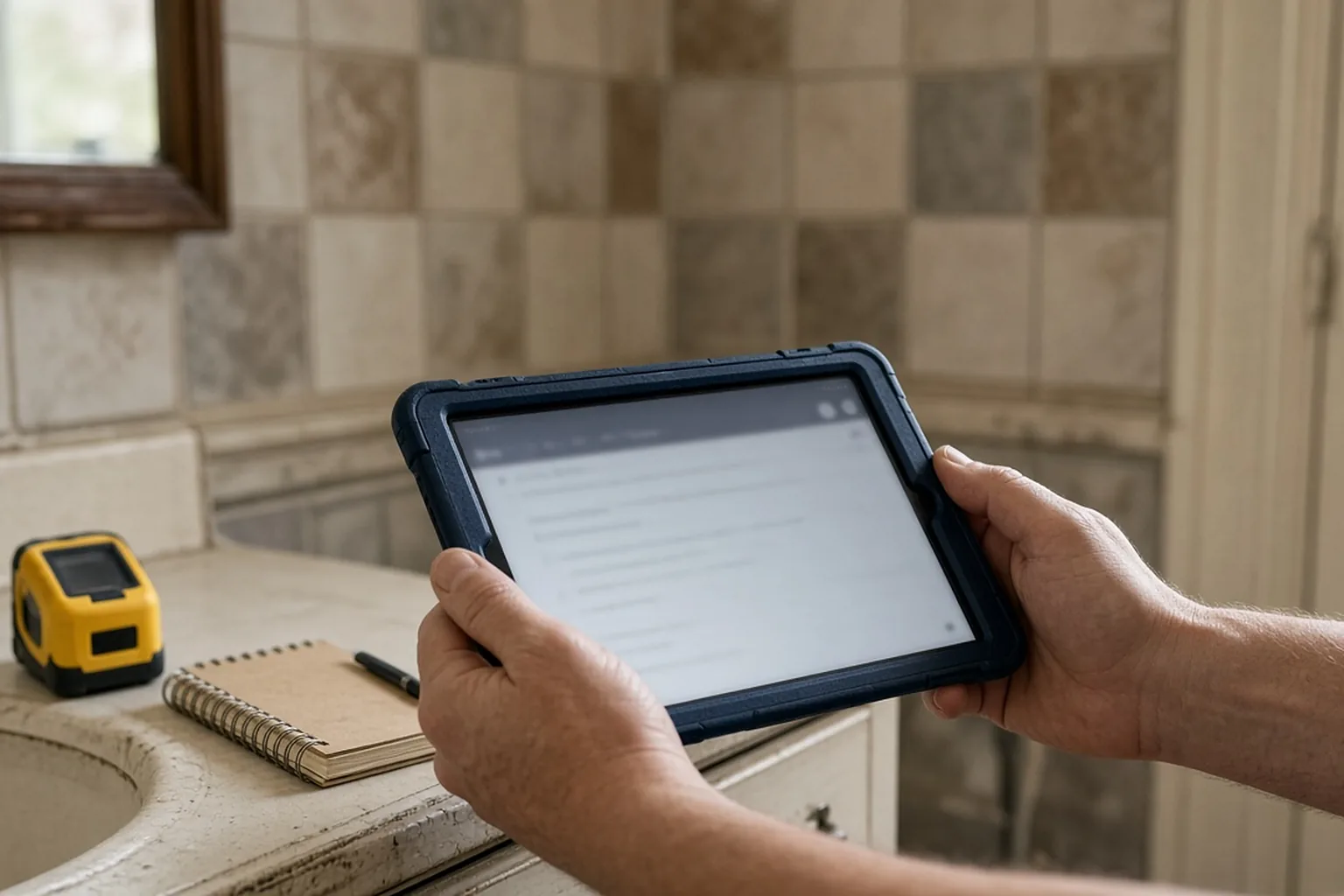
You walk a house with a potential remodeling client. They want to move a wall, change the layout, maybe keep the cabinets. You take photos, scribble notes, and try to remember which details were definite and which were just ideas.
Then you're back at your desk trying to turn all of that into something useful for estimating.
AI may be able to help organize your walkthrough notes into a first draft. But there's a catch: it can only work with what you actually captured. If you didn't measure it or confirm it, AI shouldn't be filling in the blanks.
Here's a simple way to test it without letting a polished-looking draft turn into an expensive mistake.
Capture the Right Details During the Walkthrough
You don't need a complicated new form. Start by organizing your notes the same way each time.
For each room or work area, capture:
- What you observed about the existing conditions.
- What the client says they want changed.
- Measurements, photos, or specifications you actually collected.
- Questions and decisions that still need answers.
There's a big difference between “client mentioned moving the vanity” and “vanity location approved.” Keep those separate.
If you're recording conversations, get the required permission first. And check how any AI tool handles client information before uploading notes, photos, or recordings.
Ask AI to Organize the Notes, Not Invent the Scope
For the first test, don't ask AI to write a finished proposal. Ask it to sort what you've already documented.
You could use an instruction like this:
“Organize these walkthrough notes by room. For each area, list existing conditions, requested changes, confirmed details, and open questions. Use only what's in the notes. Mark missing measurements or selections as ‘not confirmed.’ Do not add pricing, quantities, or assumptions about hidden conditions.”
That gives you something you can check against your original notes.
For example, if the homeowner says they'd like to move a bathroom vanity, the draft should list that as a request. It shouldn't quietly assume new plumbing locations, a final cabinet size, or an approved budget.
AI can make an assumption sound awfully convincing. That's why the review matters.
Check Every Detail Before It Reaches Estimating
The person who attended the walkthrough should review the draft. Compare it with your photos, measurements, and notes.
Check room names, dimensions, materials, quantities, and what's existing versus what's proposed. If you can't trace a detail back to something you documented, take it out or turn it into a question.
Some questions need the homeowner. Others need a sub, designer, engineer, or another qualified professional. AI doesn't get to make those calls.
And don't mistake organized notes for a complete scope of work. Your normal review for exclusions, selections, job costs, and client commitments still needs to happen.
Test the Process on a Job You Already Know
Before trying this on a new estimate, pull notes from a completed walkthrough. Use a version with sensitive details removed if you're still testing the tool.
Ask AI to organize the notes, review what it produces, and compare it with what your estimator or project manager actually needed.
Did it make the handoff clearer? Did it surface missing decisions? Or did you spend more time fixing the draft than you would have spent organizing the notes yourself?
If it helps, you can refine the instructions and try again. If it invents details or creates more work, narrow the task.
A clearer handoff between the walkthrough and the estimate can save you a lot of back-and-forth. Just keep the builder, not the software, responsible for the final scope.
Want to Get More Time Back From Office Work?
If estimating, follow-ups, and project paperwork are taking over your nights, let's talk about where you could simplify the work. I offer a free, 60-minute discovery call with no obligation.
Join the Mailing List
Get practical ideas for running your remodeling or custom building business with less chaos, straight from Polly.
Your name and email are used to send the list. Read the Privacy Policy.
Let’s Look at What’s Happening in Your Business.
Bring the question that keeps coming back. We’ll talk about what you want to change and whether working together makes sense.
Book a Discovery Call